
Van sales create a specific kind of pressure for distributors. The team is not only visiting accounts or dropping off products. Reps and drivers may carry stock, take new orders, update customer records, create invoices, collect payments, and confirm delivery before the route is finished. When those steps are tracked in different places, small mistakes can turn into stock mismatches, missed invoices, and messy end-of-day reporting. A good van sales platform should make each stop easier to handle while the team is still in the field.
This is why the right choice depends on the daily route, not only the software category. Some companies need deep route accounting and truck inventory control. Others need a mobile app for order capture, invoicing, proof of delivery, and store-level updates. CPG brands may also need retail execution tools when the same rep checks shelves or records merchandising notes during the visit. We compared the platforms by the parts of van sales that usually create the most friction:
- Mobile order capture and van sales workflow;
- Truck inventory, route work, and delivery proof;
- Mobile invoicing, payment collection, and accounting sync;
- Fit for CPG brands, distributors, and route-based teams;
- Setup speed, daily usability, and back-office visibility.
This list is not about picking the biggest system. It is about matching each platform to the way distributors and CPG teams actually sell, deliver, and document work from the van.
1. SimplyDepo
SimplyDepo is a mobile-first platform for self-distributing CPG brands and distributors that need field sales, DSD, van sales, invoicing, delivery proof, and retail execution in one app.
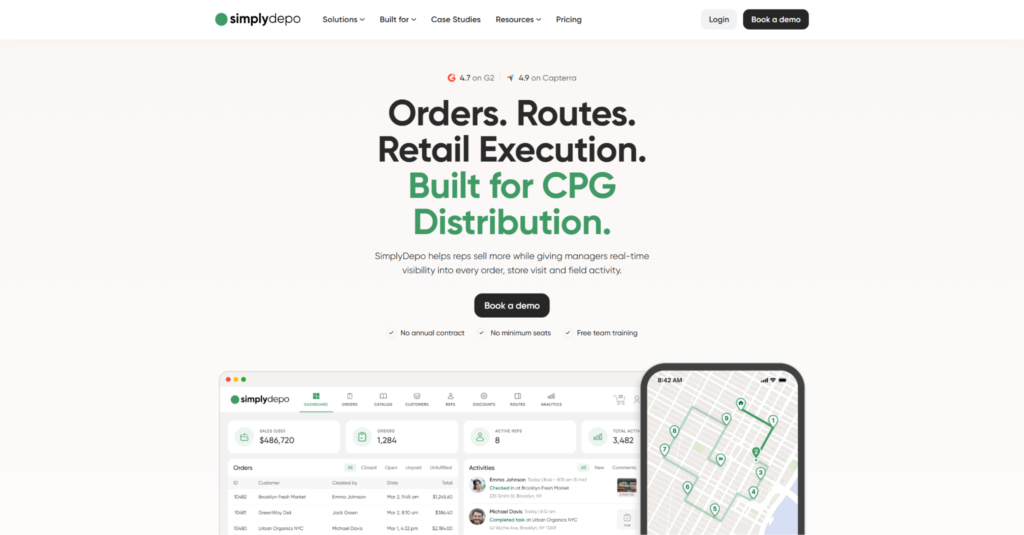
Many self-distributing CPG brands reach a point where order forms, delivery notes, invoices, and shelf checks no longer fit neatly together. SimplyDepo van sales software is built for that kind of field workflow. A rep can capture an order, manage route activity, issue an invoice, collect a Stripe payment, and record delivery proof without moving through several disconnected tools. The same visit can also include shelf checks, planogram photos, and store notes, which matter when sales and merchandising happen together.
SimplyDepo also works well for smaller and mid-sized teams that want faster adoption instead of a long enterprise rollout. Its QuickBooks Online sync helps reduce double entry after routes are completed. Offline access gives reps and drivers a way to keep working when stores, warehouses, or delivery areas have a weak signal. The platform is strongest for US and Canadian teams using QuickBooks Online, while global enterprise ERP-heavy operations or catch-weight distributors may need a different setup.
SimplyDepo stands out when van sales need to connect with the rest of the DSD workflow. The goal is not just to collect an order, but to keep the full stop clean from order capture to payment and delivery proof. It is especially useful when the same person handles several parts of the customer visit. Key areas include:
- Van sales, mobile order capture, and route work in one app;
- Mobile invoicing, Stripe payments, and delivery proof;
- Offline access for reps, drivers, and merchandisers;
- Shelf checks, planogram photos, and store visit notes;
- Two-way QuickBooks Online sync for cleaner back-office records.
SimplyDepo is the strongest fit when van sales are part of a broader CPG field workflow. It is less relevant for teams that only need a basic route planner or a deep enterprise ERP environment.
2. bMobile Route
bMobile Route is a DSD and route accounting platform for distributors that need mobile route sales, inventory control, and delivery workflows.
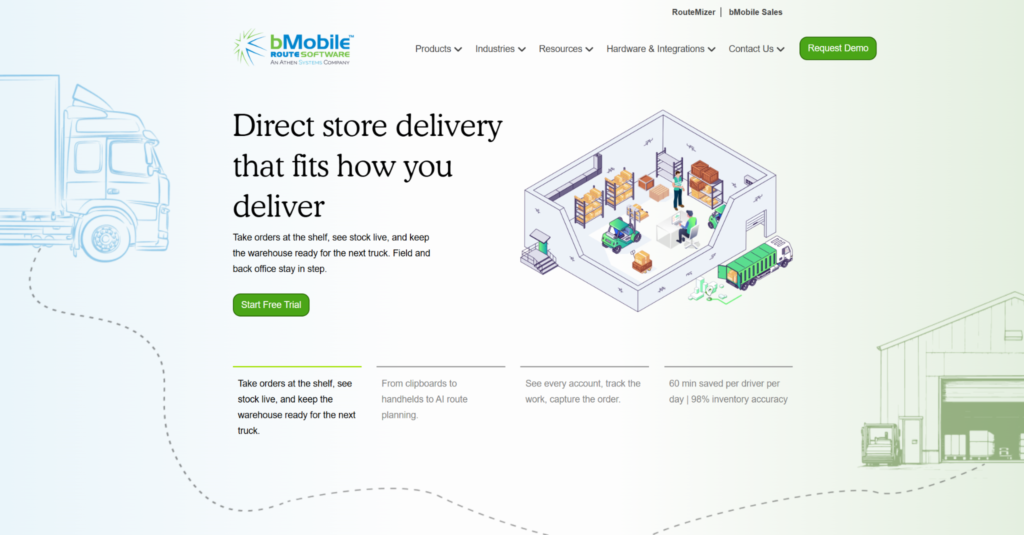
bMobile Route is closer to traditional route accounting than a simple sales app. It is relevant for distributors that need to manage truck stock, route activity, invoices, deliveries, and customer service from the field. Food, beverage, bakery, and other route-based teams may find it useful because van sales often depend on tight control over what is on the truck and what gets invoiced. The platform is aimed at companies where route accounting is a central part of daily operations. That makes it different from lighter mobile tools that focus mostly on order capture.
For distributors with established route processes, this kind of structure can be helpful. Inventory, settlement, and delivery workflows need to be accurate if the business relies on recurring routes. Buyers should still look at how much setup effort is required, how the mobile experience feels to reps, and whether retail execution or B2B storefront tools are part of the plan. A small CPG brand trying to move quickly may not need the same depth as a distributor with complex route accounting. bMobile Route is worth reviewing for:
- DSD route accounting for distributors;
- Truck inventory and route activity management;
- Mobile invoicing and customer service workflows;
- Support for route-based food and beverage teams;
- Delivery and sales workflows for recurring routes.
Companies running established route distribution models may find bMobile Route a practical option. Smaller CPG brands should decide whether advanced route accounting is necessary or if a lighter mobile-first system would be easier to manage.
3. LaceUp Solutions
LaceUp Solutions provides DSD route accounting, mobile invoicing, truck inventory, and delivery tools for distributors with more complex route operations.
LaceUp Solutions is built for distributors that need stronger control over route accounting, mobile invoicing, truck inventory, and delivery documentation. It becomes especially relevant when teams deal with chain retailer workflows, DEX invoicing, or more structured distributor requirements. Van sales can break down quickly when invoice rules, stock movement, and route documentation are not handled carefully. LaceUp addresses those heavier route needs rather than acting like a basic field sales tool. That is why it belongs in a van sales software comparison.
The platform may make more sense when route complexity is already part of the business. For some distributors, chain-store invoicing, route records, and delivery documentation matter more than retail execution or merchandising tools. Other teams may prefer a lighter workflow if they mainly need mobile sales, delivery proof, and accounting sync. Buyers should look closely at rollout effort, mobile usability, and how much route control they actually need. LaceUp is strongest for:
- DSD route accounting for distributor teams;
- Mobile invoicing and delivery documentation;
- Truck inventory and customer route workflows;
- Support for chain-store and DEX-related needs;
- Tools for complex delivery and route operations.
LaceUp is a practical option for distributors with demanding route accounting needs. Brands that want retail execution and field sales in the same lightweight workflow should compare it with broader mobile-first tools.
4. inSitu Sales
inSitu Sales is a mobile sales and DSD platform for distributors that need order entry, invoicing, inventory, delivery, and ERP-connected workflows.
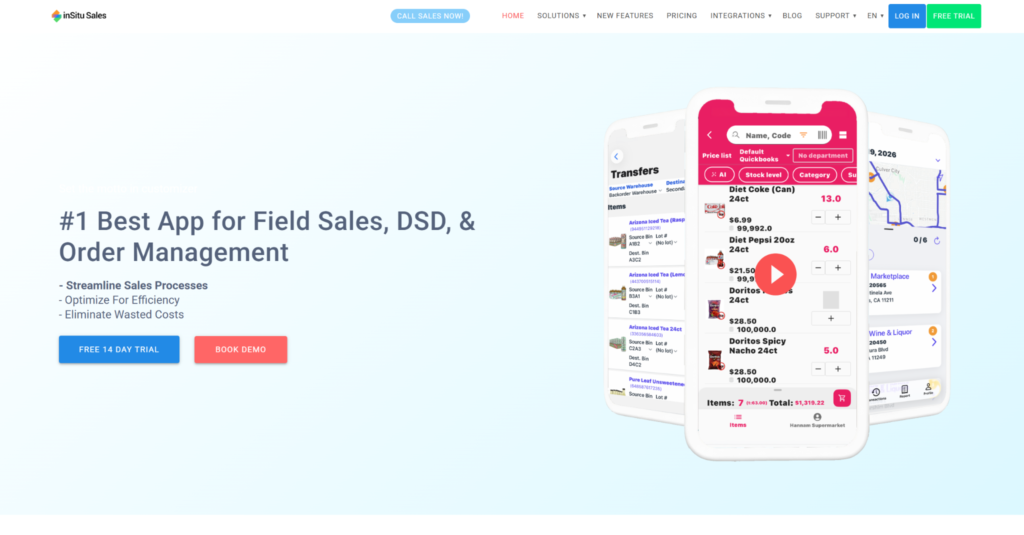
inSitu Sales can work for distributors that need more than basic mobile ordering. The platform brings together mobile sales, DSD workflows, invoicing, inventory, and parts of warehouse or dispatch support. That wider operational reach matters when field sales is closely tied to fulfillment and back-office processes. It also supports several accounting and ERP connection options, which may appeal to distributors with more complex systems. For companies that want sales and delivery activity tied into broader operations, inSitu Sales is a reasonable comparison point.
The main question is how much operational coverage the team really needs. inSitu Sales may appeal to distributors that want ERP or warehouse-related support around field activity. SimplyDepo is more focused on self-distributing CPG brands using QuickBooks Online and combining DSD with retail execution. Buyers should compare the mobile workflow, implementation effort, accounting setup, and merchandising depth before deciding. inSitu Sales is most relevant for:
- Mobile order entry for field and route sales teams;
- Invoicing, inventory, and delivery workflows;
- Support for distributor operations beyond simple ordering;
- Accounting and ERP connection options;
- Useful tools for teams managing sales and fulfillment together.
inSitu Sales can fit distributors with broader operational needs. CPG brands that prioritize QuickBooks Online, retail execution, and faster setup should compare the fit carefully.
5. Orders In Seconds
Orders In Seconds is a mobile ordering and field sales platform for wholesale distributors and manufacturers that want simpler order capture in the field.
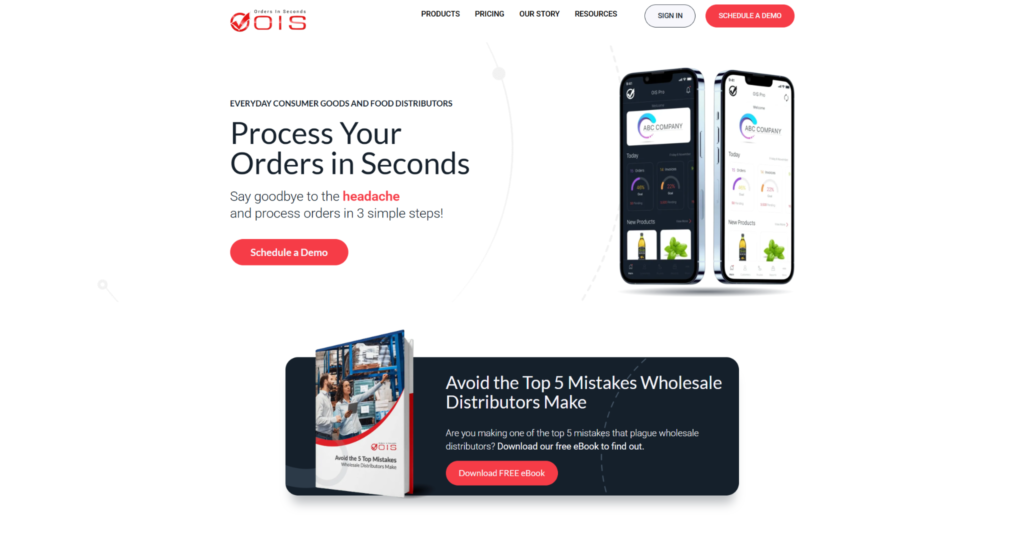
Orders In Seconds is more focused on order capture than full DSD route accounting. It helps wholesale distributors and manufacturers move mobile order entry, barcode scanning, product catalogs, customer accounts, and inventory visibility into the hands of field reps. That can be enough for teams still relying on paper forms, phone orders, or manual updates after customer visits. The product is not trying to cover every part of van sales operations. Its role is clearer when the main issue is collecting better orders in the field.
That still gives Orders In Seconds a place in a van sales list. Reps often need to create or adjust orders while visiting customers, even if another system handles delivery or accounting later. Teams should check whether they also need mobile invoicing, delivery proof, payment collection, route settlement, and retail execution. The support model may also matter for distributors that want help during rollout or daily use. Orders In Seconds is worth considering for:
- Mobile order entry for distributors and manufacturers;
- Barcode scanning and product catalog support;
- Customer account access for field reps;
- Inventory visibility during order capture;
- Useful support for teams replacing paper-based ordering.
Orders In Seconds is practical for order-led field teams. Distributors needing full van sales, route accounting, delivery proof, and retail execution should compare broader systems.
6. SalesProHub
SalesProHub is a mobile van sales platform for distributors that need offline selling, invoicing, route support, and field sales workflows.
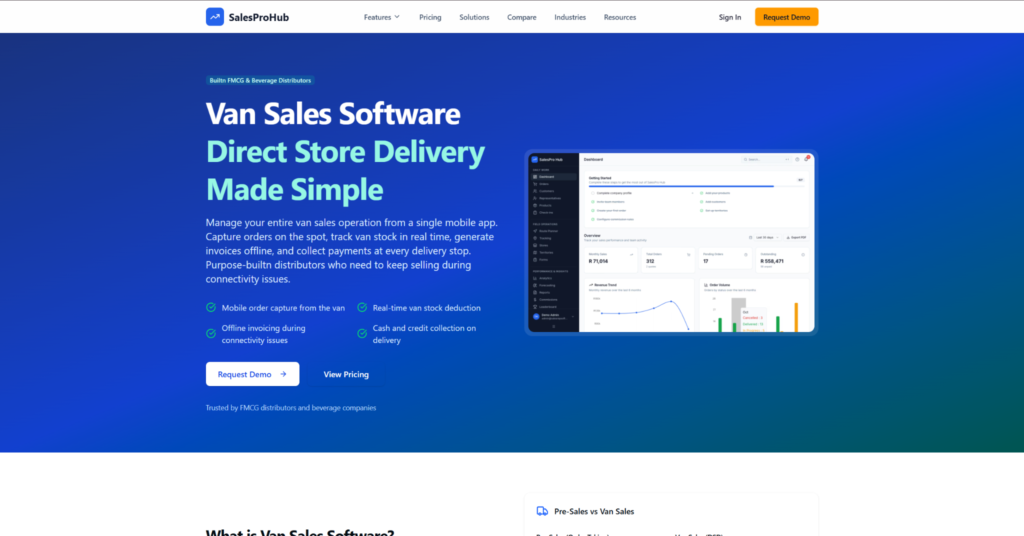
SalesProHub is aimed at distributors whose sales process happens largely through customer visits and route-based selling. It supports offline access, mobile invoicing, van sales activity, route support, and field customer visits. That can help teams keep sales moving when reps are away from the office and working through daily stops. The platform may suit distributors that need mobile selling without adopting a large enterprise suite. It is most relevant when the route is mainly about selling from the field.
Buyers should still check how far the workflow goes beyond mobile selling. Offline access and invoices are useful, but some CPG brands also need accounting sync, delivery proof, retail execution, and route planning in the same system. SalesProHub may work better for sales-led distributors than for brands that want to connect DSD with merchandising and store execution. That does not make it a poor option, but it does define the fit. SalesProHub is useful for:
- Offline mobile selling for field reps;
- Van sales workflows for distributor teams;
- Mobile invoicing during customer visits;
- Route support for daily field activity;
- Useful tools for sales-led distributors.
SalesProHub is relevant for distributors that need mobile selling and van sales support. Teams that need deeper DSD, accounting, and retail execution should compare wider platforms.
7. RouteMagic
RouteMagic is route sales and delivery software for distributors that manage van sales, customer deliveries, invoices, and route activity.
RouteMagic is built around route control and delivery coordination. It supports route planning, delivery tracking, proof of delivery, invoicing, customer accounts, and driver workflows. That makes it useful for distributors where daily delivery accuracy matters as much as field selling. The platform is especially relevant when van sales are closely tied to recurring delivery work. For delivery-heavy distributors, that focus can be more important than broader sales tools.
RouteMagic may be useful when route planning and delivery coordination are the main pain points. Buyers should check how much it covers order capture, accounting sync, merchandising, and B2B storefront needs. It should be viewed as a delivery-focused option rather than a complete fit for every CPG workflow. That focus can be valuable for teams with recurring routes, many stops, and high delivery volume. RouteMagic is strongest for:
- Route planning for delivery and sales teams;
- Proof of delivery and driver workflows;
- Invoice handling during customer visits;
- Customer account and delivery activity management;
- Useful support for distributors with recurring routes.
RouteMagic is worth comparing for delivery-heavy distributors. Brands that also need retail execution, QuickBooks Online sync, and field sales in one mobile workflow should compare it against broader DSD platforms.
Final Thoughts
Van sales software should be chosen based on the actual route workflow. Some teams need deep route accounting, while others need mobile order capture, invoicing, delivery proof, retail execution, or QuickBooks Online sync. SimplyDepo is the strongest fit for self-distributing CPG brands that want van sales connected with DSD, field sales, delivery, invoicing, and store execution. bMobile Route, LaceUp Solutions, inSitu Sales, Orders In Seconds, SalesProHub, and RouteMagic can still be good choices for more specific distributor needs.
The best choice is the platform that reflects how products are sold, delivered, invoiced, and documented during a normal route.